
 Posted by
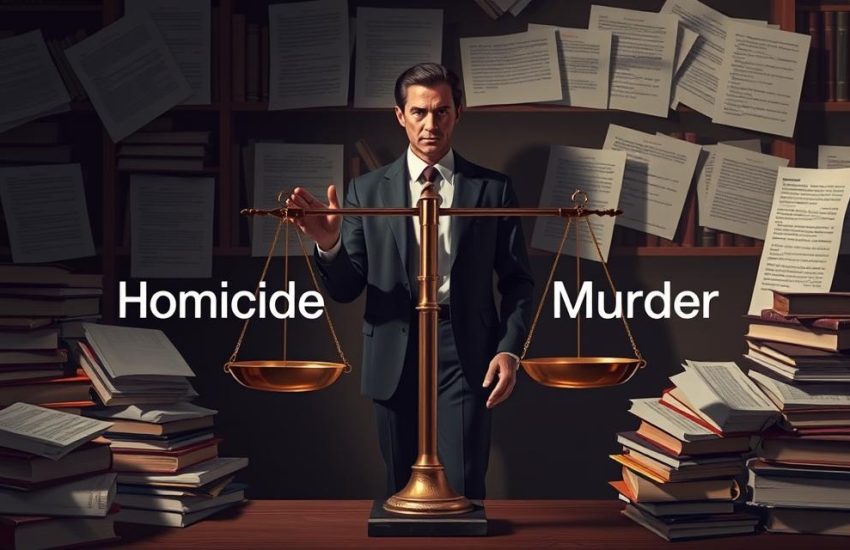
 What if killing someone isn’t always a crime? This question lies at the heart of legal distinctions that shape courtrooms across the United States. While many use “homicide” and “murder” interchangeably, the law treats them as separate concepts with critical implications for charges, defenses, and penalties.
Homicide refers broadly to one person causing the death of another. It includes both lawful acts, like self-defense, and unlawful ones. Murder, however, is a specific type of homicide requiring intent or malice aforethought. Legal experts, such as those at Villalona Law, stress that this distinction determines whether an act is criminal or justified.
Everyday language often blurs these terms, but courts scrutinize details like premeditation or recklessness. For example, accidental deaths may fall under homicide without rising to murder. Understanding these nuances is vital for anyone navigating charges related to another person’s death.
Key Takeaways
- Homicide is an umbrella term covering all instances where one person causes another’s death.
- Murder requires proof of intent or malice, making it a subset of unlawful homicide.
- Lawful homicides, like those in self-defense, carry no criminal penalties.
- Terms like “malice aforethought” define the severity of charges in legal cases.
- Misunderstanding these definitions can drastically impact legal outcomes.
Legal Definitions and Classifications
Legal systems rely on precise terminology to determine guilt or innocence in fatal incidents. Words matter when lives are at stake, and misapplying terms like “homicide” or “murder” can alter legal outcomes.
What Constitutes Homicide?
Homicide refers to any act causing another person’s death. It includes both lawful and unlawful scenarios. For example, a police officer stopping an active shooter or someone defending their home may commit justifiable homicide without criminal penalties.
Unlawful homicide involves killings without legal justification. These cases often lead to charges like manslaughter or murder. Courts examine factors like intent, negligence, or recklessness to classify the act.
What Constitutes Murder?
Murder requires malice aforethought—a deliberate intent to harm or reckless disregard for life. First-degree murder involves premeditation, like planning a poisoning. Second-degree murder covers impulsive acts, such as a bar fight escalating to fatal violence.
Manslaughter lacks malice but still results in unlawful death. Voluntary manslaughter might involve a heat-of-passion killing during an argument. Involuntary manslaughter often stems from criminal negligence, like reckless driving causing a fatal crash.
| Type | Definition | Key Element | Example |
|---|---|---|---|
| Lawful Homicide | Legally justified killing | Self-defense | Officer stopping a terrorist |
| First-Degree Murder | Premeditated killing | Malice aforethought | Poisoning a spouse |
| Voluntary Manslaughter | Unplanned killing in passion | Sudden provocation | Fatal fight after insults |
Exploring the difference between homicide and murders
Legal outcomes often hinge on one critical factor: the killer’s state of mind. Courts dissect actions through the lens of intent, a mental element that separates cold-blooded murder from tragic accidents. This mental state determines whether a killing another person becomes a capital crime or a lesser offense.
Intent, Malice Aforethought, and Degrees
Malice aforethought transforms unlawful killing into murder. New York law focuses on this concept rather than premeditation, punishing reckless disregard for human life as harshly as planned attacks. Australian courts take a different approach, dividing murder into degrees based on planning and circumstances.
First-degree charges apply to calculated acts like poisoning. Second-degree cases cover impulsive violence during arguments. Manslaughter lacks malice but still involves death another person caused by negligence or heated disputes.
Distinguishing Lawful from Unlawful Acts
Not every killing another person leads to prison. Self-defense or police interventions qualify as lawful. These scenarios require proof of immediate danger and proportional response.
Unlawful cases range from bar fights gone wrong to drunk driving fatalities. Prosecutors must show the accused acted with intent or extreme recklessness. A manslaughter charge might fit if someone dies during a robbery where no weapon was used.
Understanding these distinctions helps predict trial strategies and potential penalties. A single detail—like texting before a fatal crash—can upgrade charges from involuntary manslaughter to second-degree murder.
Implications for Charges, Penalties, and Defense
The weight of legal terminology becomes undeniable when lives and freedoms hang in the balance. A single charge can determine whether someone faces decades behind bars or walks free.
Impact on Sentencing and Legal Consequences
Murder charges carry severe penalties. First-degree convictions often mean life imprisonment without parole. Second-degree offenses may result in 15 years to life in New York. Manslaughter typically brings 5-25 years prison.
Mandatory minimums leave little room for leniency. Prosecutors use evidence of intent to push for maximum sentences. For example, a 2022 Brooklyn case saw a robbery-related death upgraded to murder due to text messages showing premeditation.
| Charge Type | Minimum Sentence | Maximum Sentence | Key Factors |
|---|---|---|---|
| First-Degree Murder | Life | Life without parole | Premeditation, multiple victims |
| Voluntary Manslaughter | 5 years | 25 years | Heat of passion, no prior intent |
| Vehicular Homicide | 1 year | 15 years | DUI, reckless driving |
The Role of Criminal Defense Attorneys
Skilled criminal defense attorneys dissect charges line by line. They challenge intent claims or negotiate plea deals to lesser offenses. In one California case, a murder charge became involuntary manslaughter after proving faulty forensic evidence.
Defense teams analyze police reports, witness statements, and forensic data. Their work often reduces sentences by years or secures alternative penalties like probation. Every case demands tailored strategies—whether arguing self-defense or exposing procedural errors.
Conclusion
The stakes in criminal cases involving loss of life couldn’t be higher. While murder always involves unlawful killing with intent, homicide includes both criminal acts and legally justified scenarios. Courts scrutinize evidence of planning, recklessness, or immediate danger to determine charges.
Manslaughter cases often result in shorter sentences—sometimes 5-25 years—compared to life imprisonment for murder convictions. A 2022 Brooklyn robbery case showed how text messages proving premeditation upgraded charges from theft to first-degree murder.
Effective legal representation becomes critical when facing these charges. Defense teams analyze intent claims, witness accounts, and forensic details to build strategies. Even small factors, like disproving malice, can reduce decades-long penalties.
Understanding these distinctions helps protect rights and predict outcomes. If involved in cases involving death another person causes, consult a qualified attorney immediately. Knowledge of legal nuances could mean the difference between freedom and years prison.