

 Posted by
 Ever wonder what makes a song safe from theft? The song copyright process is like a shield for your music. It turns your ideas into something legally protected.
Every musician wants to share their songs with the world. But, you need to know how to protect your music. Learning about song copyright is like putting on armor against theft and losing money.
Copyright starts when you make your song real, like recording it or writing it down. This guide will help you protect your music. You’ll make sure your work stays yours.
Key Takeaways
- Copyright protection starts when music is fixed in a tangible format
- Registering your copyright provides additional legal benefits
- Protecting your music prevents unauthorized commercial use
- Different copyright types exist for compositions and recordings
- Understanding copyright law is key for musicians
Understanding Copyright Basics
Music copyright is key for artists to protect their work online. When musicians make new songs, they create something special that needs legal protection. This protection lets artists decide how their music is used, shared, and made money from.
To get music copyright, you need to know the basics. Copyright protects two main things:
- The musical composition (lyrics and melody)
- The sound recording itself
What Exactly is Copyright?
Copyright is a legal tool that gives musicians special rights to their music. When you copyright your song, you show you own it and can control its use. As soon as a song is written down or recorded, it gets copyright protection right away.
Why Copyright Matters for Musicians
Registering your song with USCO helps artists a lot. It makes a public record of who owns the song. This lets musicians take legal action if someone uses their song without permission. By protecting their work, artists can:
- Stop others from using their music without permission
- Get money if someone uses their music without permission
- Show clear proof of who owns the song
Professional musicians know copyright is more than just a legal step. It’s a way to keep their creative work safe and make money from it.
Types of Copyrights for Music
Understanding music ownership rights is key for musicians. There are different copyrights that protect their work. Knowing these helps artists keep their music safe.
- Musical Composition Copyright
- Sound Recording Copyright
- Derivative Works Copyright
Musical Composition Copyright
Musical composition copyright guards the heart of a song. It covers melody, lyrics, harmony, and the song’s structure. Songwriters can protect their ideas by applying for copyright.
Sound Recording Copyright
Sound recording copyright is for the song’s actual recording. It’s different from composition rights. It focuses on the song’s performance.
| Copyright Type | Protection Scope | Key Elements Covered |
|---|---|---|
| Musical Composition | Song Structure | Melody, Lyrics, Harmony |
| Sound Recording | Audio Performance | Specific Recording, Arrangement |
| Derivative Works | Adaptations | Remixes, Arrangements |
Derivative Works Copyright
Derivative works copyright protects changes to original songs. This includes remixes and new versions. Artists can get more protection by registering these changes.
Benefits of Copyrighting Your Song
Protecting your music is more than just making it. Copyrighting your song gives you big benefits. It keeps your work safe and helps you make money from it.
Copyrighting your song gives you strong protections and chances. Let’s look at why owning your music is important.
Legal Protection from Infringement
Copyright makes your music safe from being used without permission. It shows you own your song and can take action if someone uses it wrong.
- Establishes official proof of ownership
- Enables legal action against unauthorized use
- Creates public record of musical creation
Financial Benefits and Revenue Streams
Copyrighting your song can make you money. It turns your music into a way to earn income.
| Revenue Stream | Potential Earnings |
|---|---|
| Licensing | $500 – $5,000 per usage |
| Royalties | $0.10 – $0.50 per stream |
| Performance Rights | $50 – $500 per performance |
Preservation of Artist Rights
Copyright lets musicians control their work. This protection is not just about money. It keeps your music true to you for a long time. Your copyright lasts for your life plus 70 years, protecting you and your family.
How to Establish Authorship
Protecting your song rights starts with keeping records of your work. Musicians need to show proof of ownership. This helps avoid copyright problems.
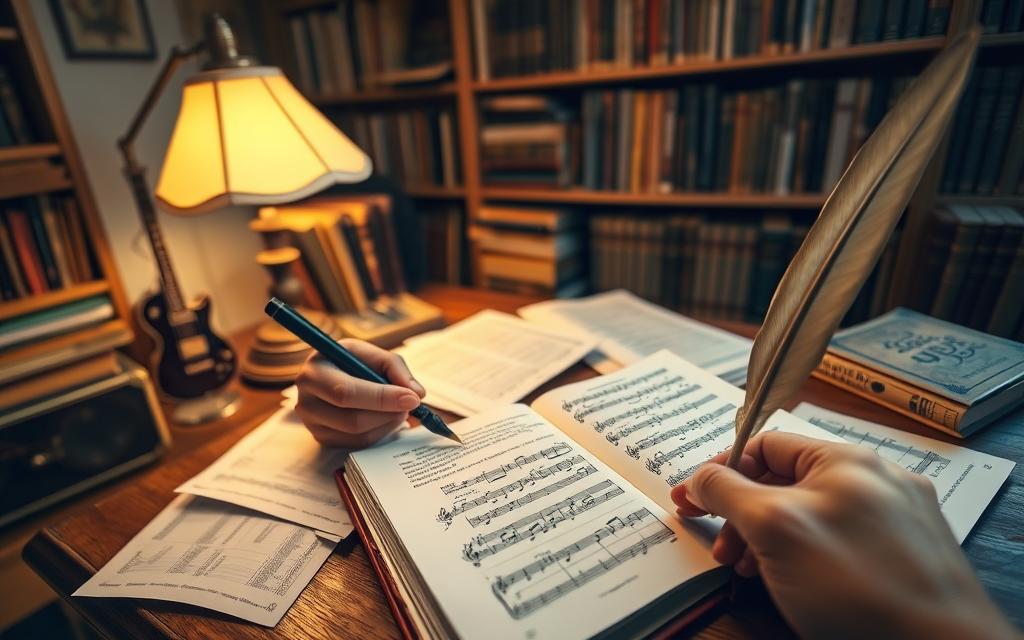
Setting up authorship needs careful record-keeping and legal steps. By keeping detailed records, you can save on song registration costs.
Documenting Your Creative Process
Good documentation is key when you register your song. Here are some important steps:
- Create dated digital and physical drafts of your compositions
- Save raw audio recordings with timestamps
- Maintain detailed songwriting journals
- Store email correspondence related to song creation
Importance of Written Agreements
When working with others, clear agreements are vital. Musicians use special tools to keep their work safe:
| Documentation Type | Purpose | Recommended Action |
|---|---|---|
| Split Sheets | Define percentage ownership | Complete before recording |
| Collaboration Contracts | Outline creative contributions | Signed by all participants |
| Work-for-Hire Agreements | Clarify commissioned work rights | Detailed written contract |
Tip: The “poor man’s copyright” method of mailing yourself a copy is legally ineffective. Always pursue official registration to protect your musical works.
The Copyright Registration Process
Protecting your music starts with knowing how to copyright it. The process might seem hard, but it’s key for musicians to keep their work safe.
Getting your music copyrighted needs focus. Artists can protect their songs by using the U.S. Copyright Office’s easy method.
Step-by-Step Registration Guide
- Gather all you need about your song
- Pick the right copyright type
- Get your music ready, digital or physical
- Fill out the copyright form
- Send in your stuff and pay
Registration Fees and Processing
Knowing the fees helps musicians copyright music fast. The U.S. Copyright Office has different prices for each type of registration.
| Registration Type | Current Fee | Processing Time |
|---|---|---|
| Standard Online Registration | $45 | 3-5 months |
| Paper Registration | $125 | 7-10 months |
| Single Song Registration | $35 | 4-6 months |
Filing Your Copyright Application
Artists can file online or by mail. The online way is usually quicker and easier for most musicians.
- Online filing is best for most artists
- You need to make an account on the Copyright Office website
- Upload your music files
- Pay the fee
By doing these steps, musicians can protect their music and have a legal record of it.
Online Registration: The Easy Way
Getting your music copyrighted is now easy. The U.S. Copyright Office has made it simple. You can protect your music online fast and easy.
To register your music online, you need to know a few steps. The electronic Copyright Office (eCO) makes it easy to protect your music.
Preparing for Online Registration
Before you start, collect these important documents:
- Complete musical composition details
- Personal identification information
- Date of creation
- Publication status
Required Information for Copyright Form PA
The copyright form PA needs some specific info:
| Information Category | Details Required |
|---|---|
| Personal Information | Full legal name, contact details |
| Musical Work Details | Title, genre, creation date |
| Authorship Information | Composer names, contributors |
You can register your music online at the U.S. Copyright Office website. It’s safe and easy to protect your music.
Common Misconceptions About Copyright
Music copyright can be tricky for songwriters and musicians. Many don’t know how to register audio copyright or protect their work.
Many artists think legal steps are hard to protect their music. But, copyright protection is simpler than you think.
Can I Copyright Unpublished Songs?
Songwriters often ask about unpublished songs. The answer is yes, copyright protection starts right away when you create your work. Here are important points:
- Unpublished songs get automatic copyright protection
- Your work is safe from the moment it’s written down
- Legal tips for songwriters say to keep records of your work
Do I Need to Register to Have Copyright?
Knowing how to copyright beats and songs means understanding automatic and registered protection.
| Automatic Protection | Registered Copyright |
|---|---|
| Immediate legal protection | More legal proof |
| No need to file anything | Can sue for money |
| Basic rights to your work | Public record of your work |
While you don’t have to register, it helps a lot. Most musicians say to register for the best protection.
International Copyright Considerations
Understanding global music laws is key. Musicians sharing their work worldwide face legal hurdles. A good music copyright guide helps artists reach fans everywhere.

Music copyright involves complex global agreements. These protect artists’ work worldwide. When making a song, musicians need to know how it’s protected globally.
Global Copyright Frameworks
International copyright protection uses several main tools:
- The Berne Convention: A key international copyright treaty
- World Intellectual Property Organization (WIPO) agreements
- Bilateral copyright protection agreements
The Berne Convention Explained
The Berne Convention started in 1886. It changed how music is protected online. It makes sure countries protect creative works automatically, without needing to register them.
Important Berne Convention points are:
- Automatic copyright protection
- Minimum standards of protection
- Non-discrimination for foreign works
While treaties set a framework, enforcement varies. Some countries protect intellectual property better than others. It’s important to know the laws in each region.
Copyright Protection Across Major Markets
Different countries have their own views on copyright. In the United States, copyright lasts for 70 years after the artist dies. The European Union has similar rules. But, some Asian countries have their own rules.
For independent musicians, knowing these differences is vital. A smart copyright strategy can help protect work and earnings globally.
Copyright Duration and Renewal
Protecting your music legally means knowing about song copyright duration. Musicians put a lot of time and creativity into their work. Copyright laws help keep their work safe for many years.
In the United States, music gets protected for a long time. It lasts for the creator’s life plus 70 years after they die. This long protection helps musicians and their families financially and creatively.
Key Aspects of Copyright Duration
- Lifetime protection plus 70 years for individual creators
- Different rules apply for works created as “works for hire”
- Automatic protection begins at the moment of creation
Navigating Copyright Renewal
For music made before 1978, knowing how to file copyright is key. Older music might need special renewal steps to stay protected. Today’s musicians get automatic protection without needing to renew.
Artists should keep good records of their copyright. Writing down when you created it and registered it helps keep your rights safe.
Strategic Copyright Management
- Register your musical composition early
- Keep detailed records
- Know your copyright timeline
- Think about licensing your music
Managing song copyright needs careful legal attention. By knowing these rules, musicians can protect their music and make money from it in the future.
Enforcing Your Copyright
Protecting your music means knowing how to use your legal rights. Being the copyright owner gives you strong tools to fight against misuse.

If someone uses your song without permission, you have steps to take. These steps can help you handle the problem well.
Initial Infringement Detection Steps
- Document all evidence of unauthorized use
- Collect detailed records of the infringement
- Gather proof of your original copyright application steps
- Determine the extent of unauthorized usage
Legal Recourse Options
Musicians have many ways to deal with copyright issues. The most common ways include:
- Sending a formal cease and desist letter
- Filing a lawsuit in federal court
- Using the Copyright Claims Board for smaller disputes
- Negotiating a licensing agreement
| Action | Potential Outcome | Cost Consideration |
|---|---|---|
| Cease and Desist | Immediate Stop of Infringement | Low Cost |
| Federal Lawsuit | Potential Monetary Damages | High Cost |
| Copyright Claims Board | Streamlined Resolution | Moderate Cost |
Getting help from a lawyer is very important. Timely registration strengthens your position. It lets you get statutory damages and lawyer fees.
Professional Recommendations
Talking to a music copyright lawyer is a good idea. They can give you advice that fits your situation. They can help you figure out the best way to protect your song.
Music Licensing: An Overview
Music licensing is key for artists to keep their music safe and make money. It’s about understanding how to use their songs in different ways.
It lets creators let others use their songs and get paid for it. This way, artists keep their work safe and make money.
How Licensing Works for Copyrighted Songs
When artists license their music, they let others use it for a fee. The cost depends on how the song is used. Artists can decide how their music is used through special deals.
- Performance Licenses: Enable public performance of music
- Synchronization Licenses: Allow music placement in visual media
- Mechanical Licenses: Permit musical reproduction
Different Types of Music Licenses
Knowing about music licensing helps artists earn more and keep their work safe.
| License Type | Purpose | Typical Users |
|---|---|---|
| Performance License | Public music playback | Venues, Radio Stations |
| Sync License | Music in visual media | Films, TV Shows, Commercials |
| Mechanical License | Music reproduction | Streaming Platforms, Record Labels |
Artists can work with groups like ASCAP or BMI to handle their licensing. This helps them get paid for their music.
Creative Commons and Alternative Copyright
Musicians looking into DIY song copyright find Creative Commons. It’s a flexible choice instead of traditional copyright. This model lets artists share their music in new ways while keeping some rights.
Creative Commons has many licenses. They let songwriters control how others use their music. This is different from usual copyright online.
Understanding Creative Commons Licenses
Creative Commons licenses vary. Each one has its own rules:
- Attribution (CC BY): Others can use, remix, and share your work with credit
- Non-Commercial (CC NC): Stops others from using your music for money
- No Derivative Works (CC ND): Allows sharing but no changes
- Share-Alike (CC SA): Makes sure new works use the same license
Key Differences from Traditional Copyright
Traditional copyright gives full legal protection. Creative Commons is more flexible. The big difference is the control artists have over their work.
Choosing Creative Commons lets musicians share and protect their music. It helps them work together, share their music, and keep control over their work.
Songwriters and Copyright Organizations
Music rights are complex. Understanding PROs is key. They protect musicians’ work and ensure fair pay.
Songwriters know joining a PRO is vital. It helps manage music rights. In the U.S., ASCAP, BMI, and SESAC are the top ones.
ASCAP and BMI: Protecting Musical Interests
These groups offer important services. They help musicians a lot.
- They track music plays.
- They collect royalties.
- They give money to creators.
- They help with legal issues.
How PROs Help Protect Your Music
When you register your song, a PRO helps more. They watch over your music everywhere. This includes radio, streaming, live shows, and online.
Being in a PRO has big benefits. You get:
- Full royalty tracking
- Expert rights management
- Legal help for musicians
Both new and famous artists benefit. They keep their music safe and earn fair pay.
Music Copyright Case Studies
The music world has seen many big copyright cases. These cases show how to protect songs and deal with intellectual property rights. Knowing about these cases helps musicians understand the music copyright world better.
Many famous copyright fights have changed how artists protect their music. These fights show why it’s key to know how to copyright a song. They also show the legal issues that come with owning music.
Landmark Copyright Battles in Music
- The Marvin Gaye vs. Robin Thicke/Pharrell Williams case showed how tricky musical similarity can be
- George Harrison’s “My Sweet Lord” case set rules for accidental copying
- The fight between Beastie Boys and Newton over sampling
Key Lessons from Copyright Litigation
These legal fights teach important lessons for musicians:
- Keep detailed records of your creative work
- Know the difference between getting inspired and copying
- Get the right permissions for samples and borrowed parts
- Get advice from music copyright lawyers
Music copyright cases show that protection is more than just registering. Artists must protect their work by documenting it well. They must also know the law and respect other creators.
Tips for Independent Artists
Independent musicians face unique challenges when protecting their creative work. It’s key to have a strong DIY song copyright plan. This helps keep your music safe and legally protected.
To navigate the copyright world, you need a good plan and to act fast. You can quickly copyright your music by knowing important legal tips. Also, use digital tools to help you.
Crafting Your Copyright Strategy
Good copyright management means several important steps:
- Document your creative process well
- Keep detailed records of song creation dates
- Understand registration requirements
- Track possible infringement chances
Essential Resources for Self-Publishing Artists
Independent musicians have great digital tools for copyright protection:
| Resource | Purpose | Cost |
|---|---|---|
| U.S. Copyright Office | Official Registration | $45-$65 |
| Promoly | Music Distribution | Free/Paid Tiers |
| BMI | Royalty Tracking | Free Membership |
Use platforms like Promoly to share your music safely. It also tracks who listens to it. These tools help you protect and make money from your music.
Budget-Friendly Copyright Management
There are ways to protect your music without spending a lot. Focus on digital registration and free tracking tools. Also, document your music well.
The Future of Music Copyright
The music world is changing fast with new tech. Now, artists can share their music online and earn money. But, they need to know how to protect their work in this new world.
The Music Modernization Act is a big step forward. It helps artists get paid fairly for their music online. New tech like streaming and blockchain is also changing how artists manage their rights.
New tech like AI and machine learning bring new challenges. Artists must keep up with the law to protect their music. They need to know how to handle their music in the digital world.
Working together across borders is key. As music travels worldwide, artists need to understand laws in different places. This helps them keep their music safe in a global market.